 Segmentit team
 Segmentit
Look around the object
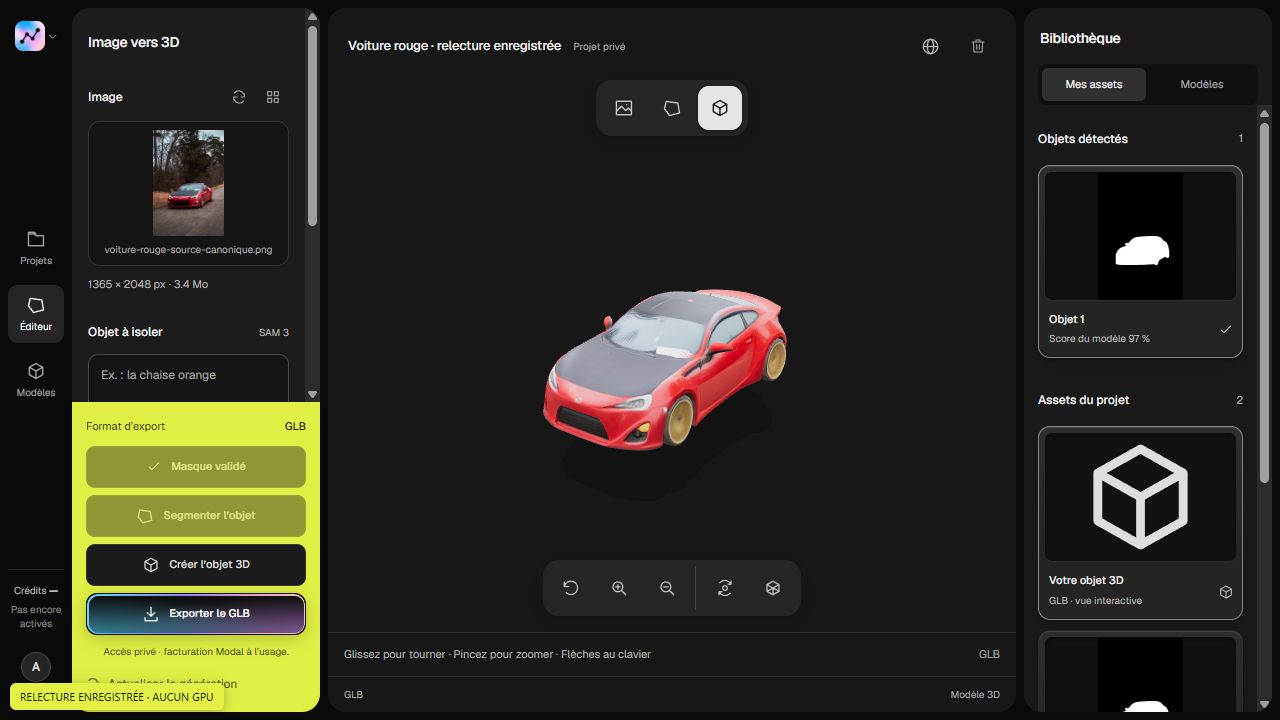
A model generated from a photograph needs inspection beyond its original viewpoint. The front may look convincing while the back, underside or joints need work. Decide whether the asset will be a distant prop, a close-up object or an interactive model that visitors can rotate.
Rotate the model and inspect its different sides. A photograph does not show everything: hidden areas may differ from the real object.
Inspect thin parts
Check legs, handles and joints. Zoom out to assess the overall silhouette. A flaw may be acceptable in a distant scene but visible in a close-up.
Test in your scene
Export the model and open it in your software. Check scale, orientation and materials under your lighting. Keep an original copy before editing.
Separate shape from appearance
A dark patch is not necessarily a hole in the mesh. Change the view and lighting in your software to distinguish geometry from shadows or texture. Look for flat surfaces that appear inflated and nearby parts that have fused together.
If the model contains surrounding scenery, revisit the segmentation mask. If a surface hidden in the photograph is wrong, mask corrections alone may not resolve it: another reference or geometry editing may be needed.
A checklist before delivery
| Check | Question |
|---|---|
| Silhouette | Is the object recognisable from the intended viewpoints? |
| Hidden surfaces | Do the back and underside suit the final framing? |
| Details | Are thin parts present and separate? |
| Materials | Do textures load in the destination software? |
| Placement | Are scale, pivot and orientation appropriate for the scene? |
For a distant prop, prioritise flaws visible from the final camera. For an interactive presentation, examine every accessible angle. A plausible reconstruction is not a precise measurement of the real object.
Choose the file to deliver
Read the GLB and OBJ comparison to understand file dependencies. Reopen the export in an empty project, ideally after copying it into another folder to reveal textures still linked to the working directory. Keep the editable source as well.